Whenever I scroll through Instagram and see all the flies that are tied, I noticed that there are many incredible close up pictures of these flies, often with either pitch black backgrounds or with nice blurry backgrounds. I set out to do the same. To learn, and to help out fly tyers in the Boutique.
The one constraint that I gave myself was to take the pictures on an iPhone, in my case the iPhone 14 Pro. I don't have a DSLR, nor do I want to buy want and learn how to use it. This is a significant constraint, because with a DSLR and a good macro lens you will have a lot more flexibility. To get ahead a little: with later iPhone model cameras you can take really good pictures!
First steps: pictures of flies with a white background
If you go to the flies library, you will see that all pictures are more or less the same. These were taken in a so called 'photo box' or 'photo booth'. The one I have has an LED light ring in the top. The light can be adjusted in 3 settings from warm white, to medium warm white to pure/cold white. The brightness can be adjusted in 5 steps from low to high. It came with different plastic background colors that you can put in the box. You can find many of these online easily.
I quickly noticed that the flies were too dark from the bottom. This is why I used an additional light that shines from the bottom. This is a light that can be charged by USB-C and it can shine REALLY bright (like 'don't-look-into-it-bright').
Lastly, to hold the fly I used a simple metal clip and a hot glue gun stick to stick the hook in 😄
Combine everything and you have the setup below.

Lighting
I took these pictures in a room that had quite a lot of daylight and it was during the spring. Sometimes I had to put the box facing the window so that on top of the 2 LEDs there was extra light coming in.
A few months later in the winter, on a cloudy day and towards the end of the day, I noticed that this exact same setup was not really good enough anymore, because there was not enough natural light coming in. Even with the 2 LEDs, flies would look dark.

During this time I was also intrigued by fly tyers that made these amazing pictures of flies with a dark background. While I was building the Boutique, I talked to many fly tyers and many shared a lot of great tips.
For lighting, I'll conclude with some learnings:
- If you have bright, natural sunlight, this will almost always work well. Pictures of flies with some green (a tree or bush) on the background, or flies on a branch of tree can look really nice
- If you don't have good natural light, try bright LEDs. Note that you will need a lot of them to create good light, but do note that in turn it will become difficult to not light up the background too much.
Point 2 brings us to the next section.
Having a go at pictures with a dark background
I was always intrigued by the pictures of flies with a pitch black background. Most fly tyers that I spoke to achieve this with some black fabric, a DSLR camera and then editing the pictures afterwards.
My goal was to see how far I could get with just my iPhone 14 Pro camera and no additional editing.
A few attempts and iterations were needed to get to the final result. Here are a few of the things that I tried.
Photo box with black plastic background
Same setup as above, but now with the black plastic background. Result: too much light on the background, no way this will ever become pitch black.


Photo box with black cloth
This is based on one of the tips that I got. Instead of the plastic background I used a 100% cotton black cloth, and only the top LED.
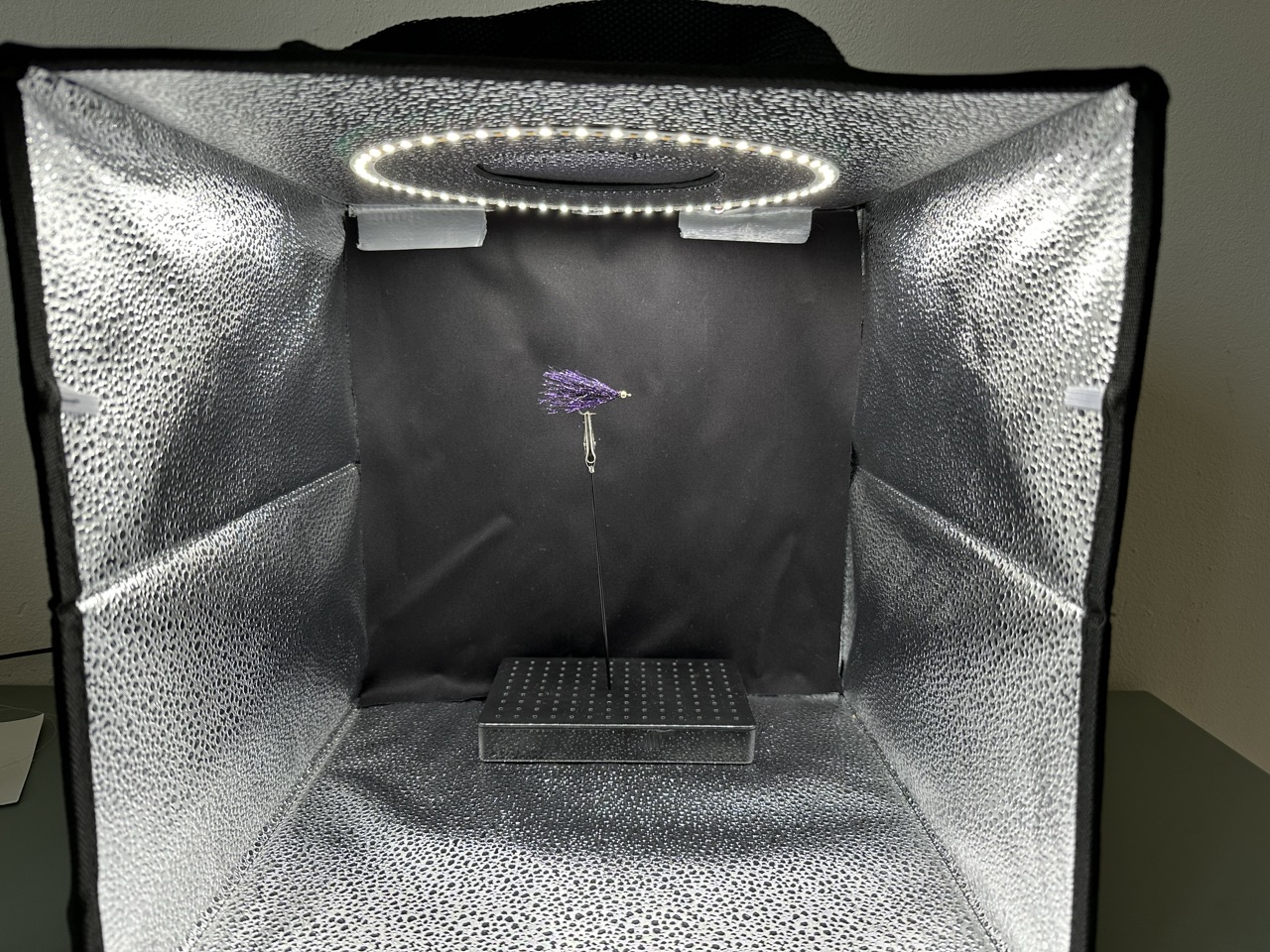
This resulted in the following picture:
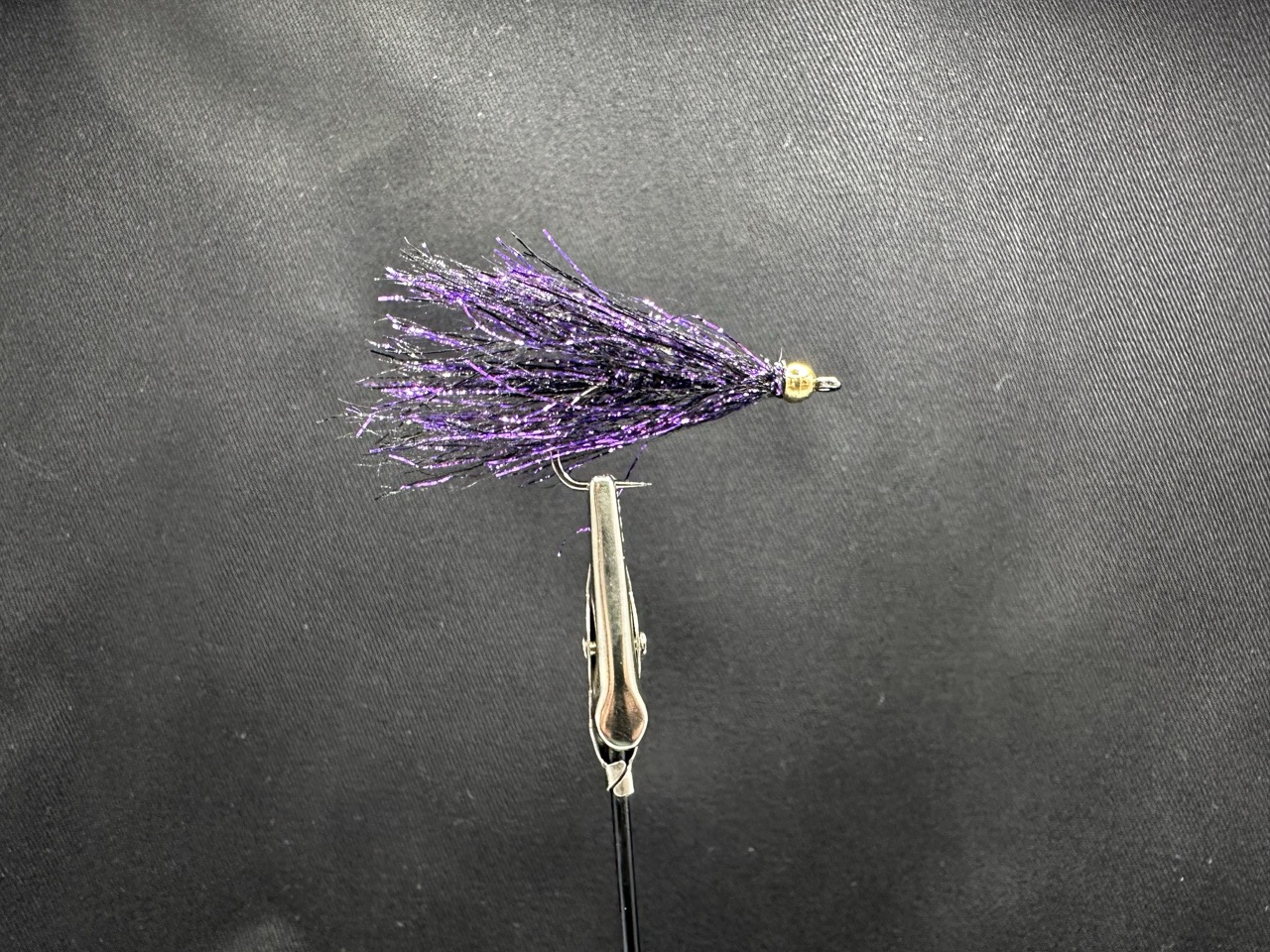
I have seen a fly tyer getting pitch black results with a similar setup, but he was using a DLSR camera, so this is not going to work for me.
Black cloth on the wall
I knew that moving the fly away from the background will make it more fuzzy, catch less light, and therefor is more likely to be really black. So I put a piece of black cotton on the wall and tried a few setups.
I also switched to an LED light ring because holding the rectangular LED from earlier was cumbersome. Worst case, if nothing works out, I can always use the light to become a make-up artist social media influencer! 😅
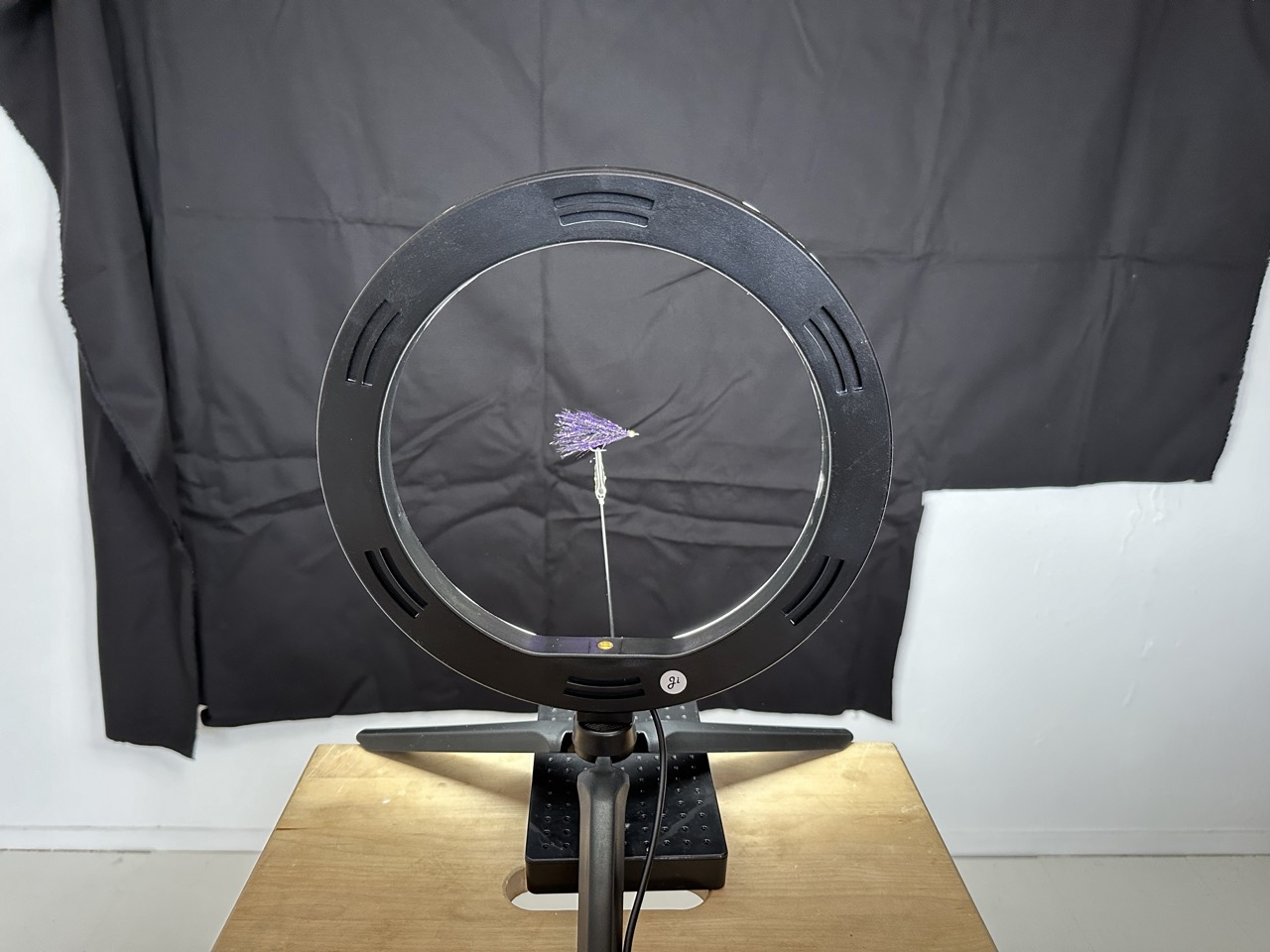
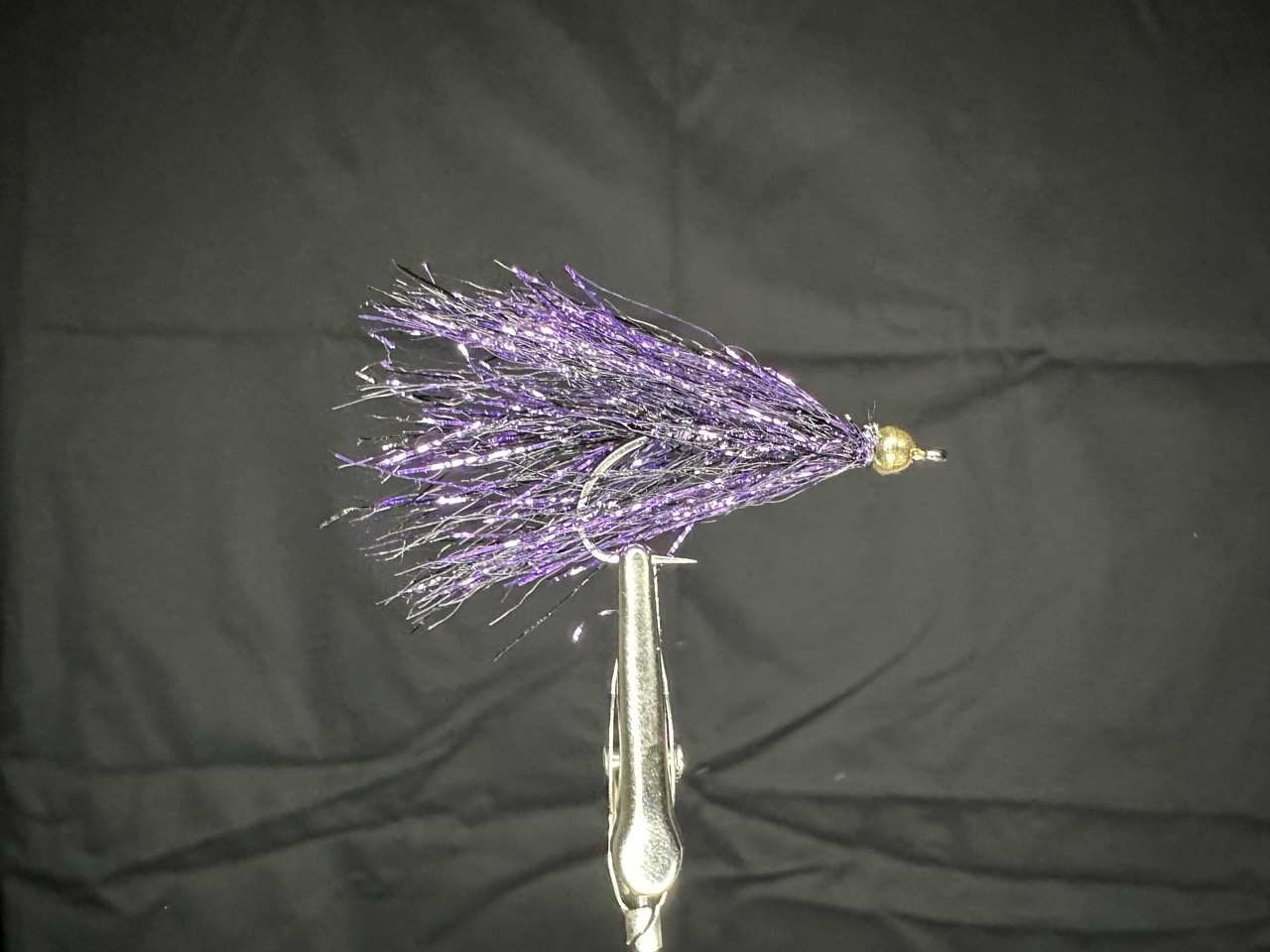
Next I tired a few different things with the light position, the distance of the fly to the light, and the distance of the fly from the wall.

Closing the blinds 🪟
When most of the issues were caused by too much light, I thought: what if I just close the window blinds... This made a huge difference!

Decreasing the amount of light
Next I also decreased the brightness of the light ring. Because the room is much darker, the fly does not need much light for it to show up crisp and clear in the pictures. And the advantage of that is that the background also becomes darker.
And then last thing that I did was play with the position of the light ring.
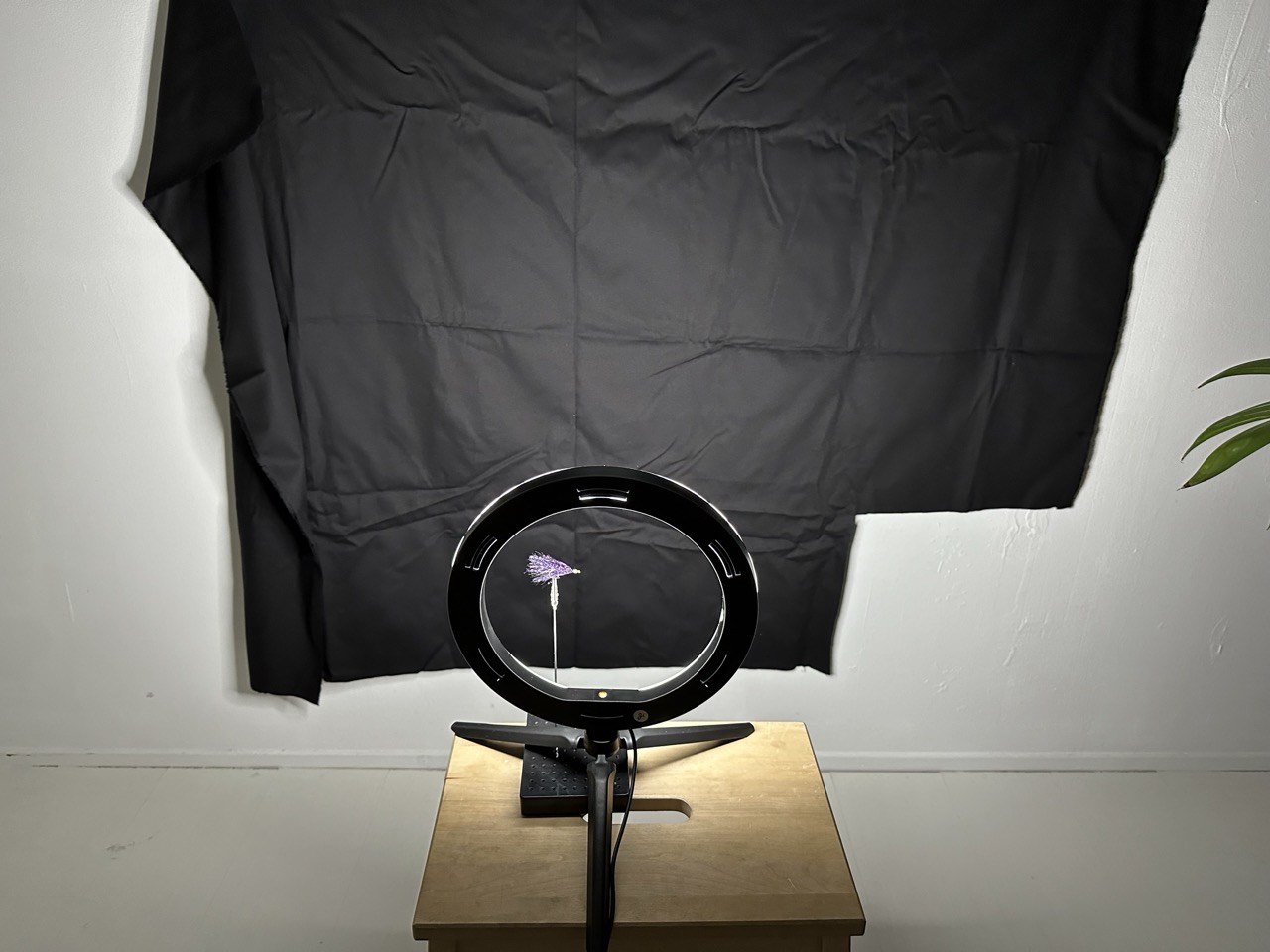
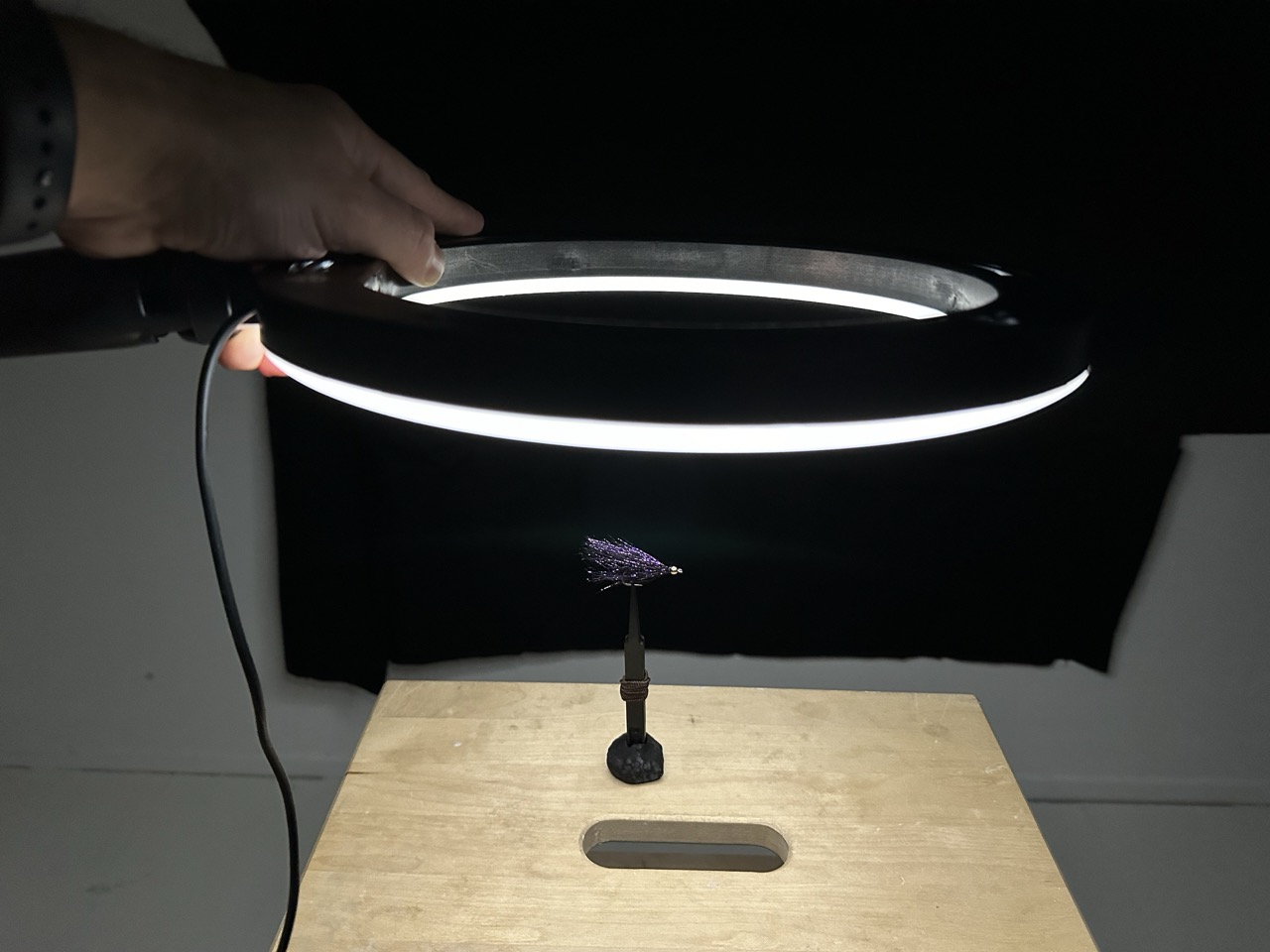
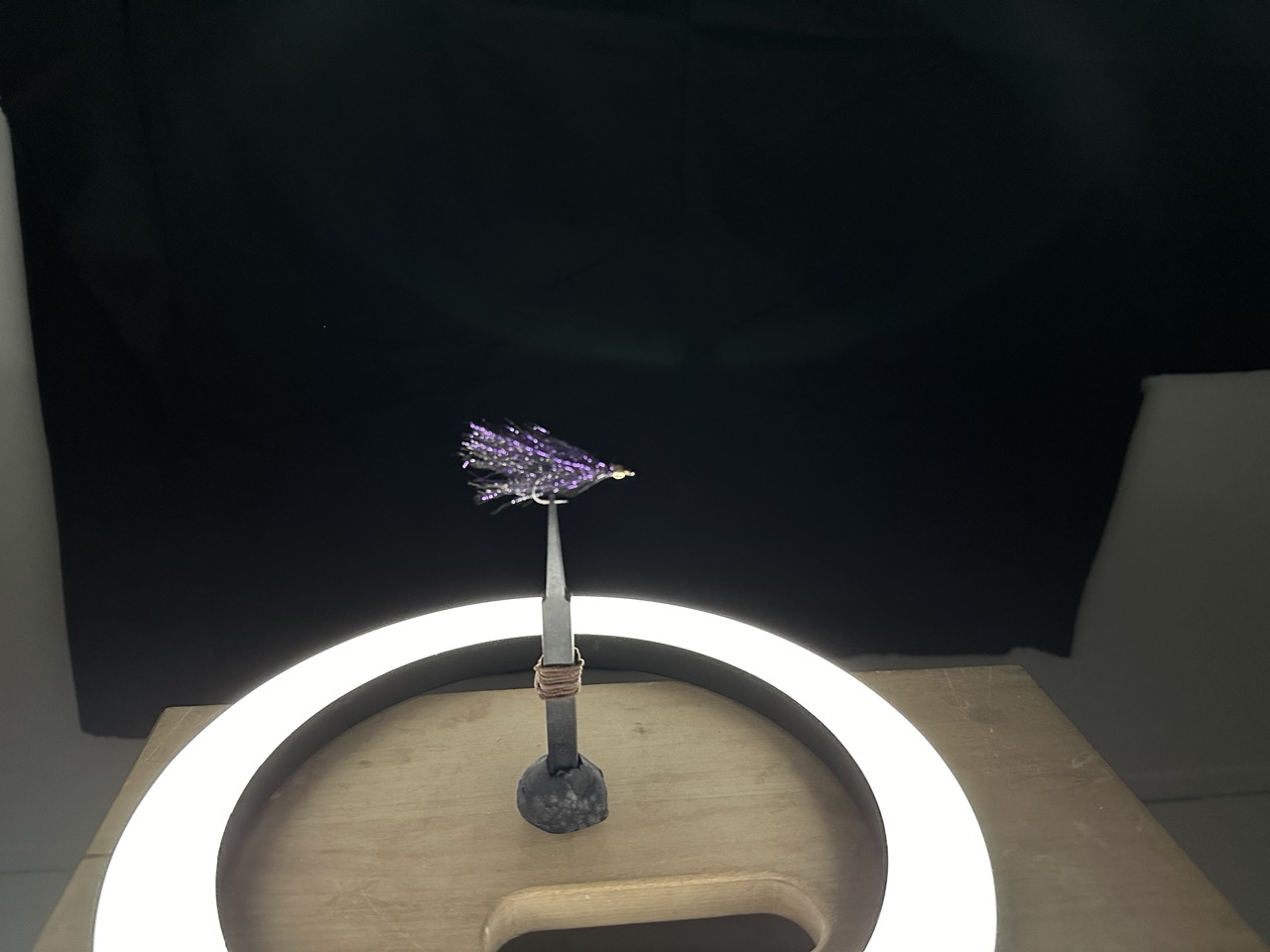
Light from the bottom worked best by far. The fly gets great lighting this way, and the background captures the least amount making it almost pitch black. And that's using just your phone camera!
The last adjustment that I made was putting the fly up higher. This way it there would be less 'glow' in the bottom of the picture, so the background was even better. Never throw away those fly line boxes! 😅

I also set the light ring to the warmest white, still on the lowest brightness setting.
The results 📸
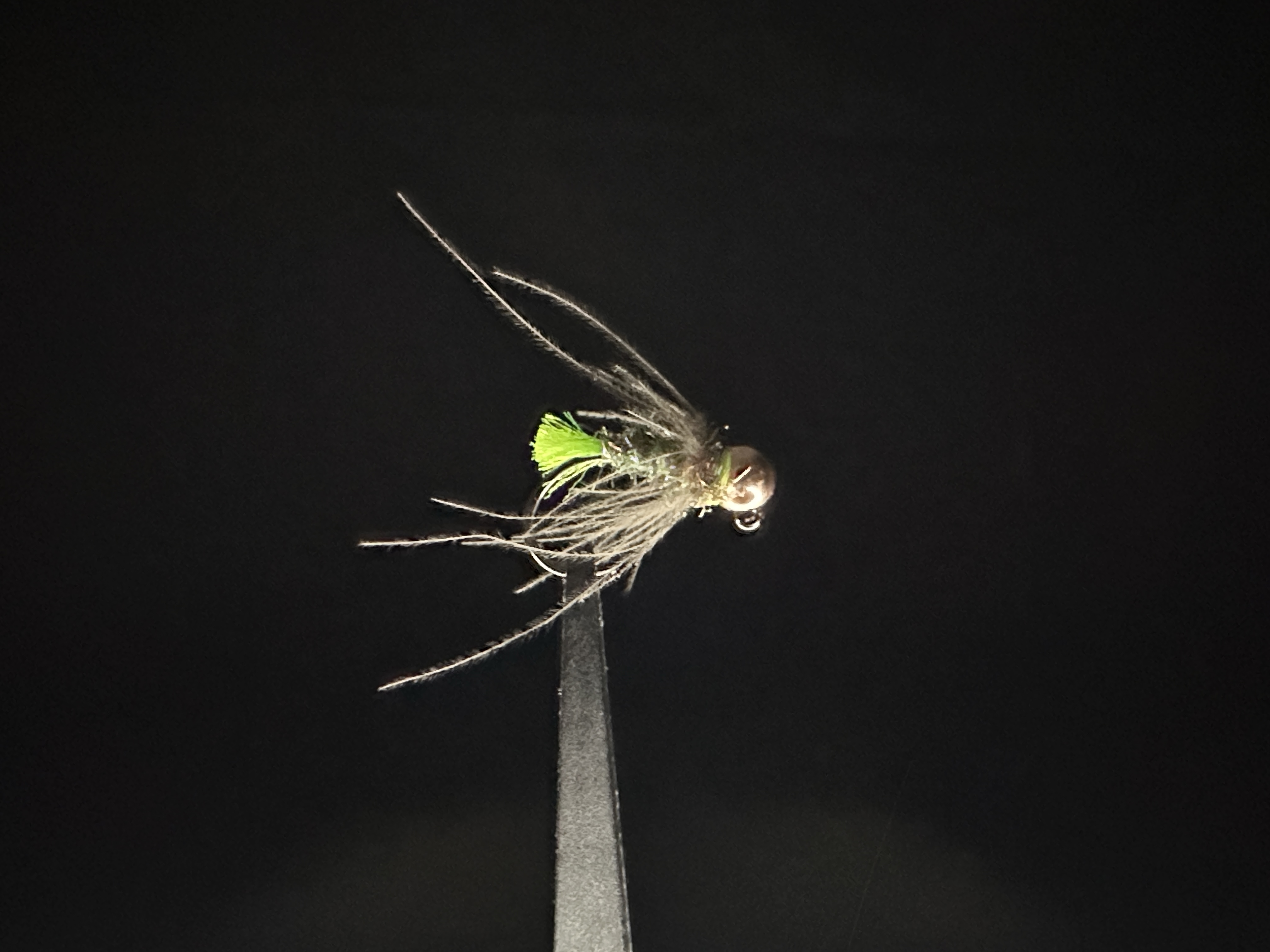
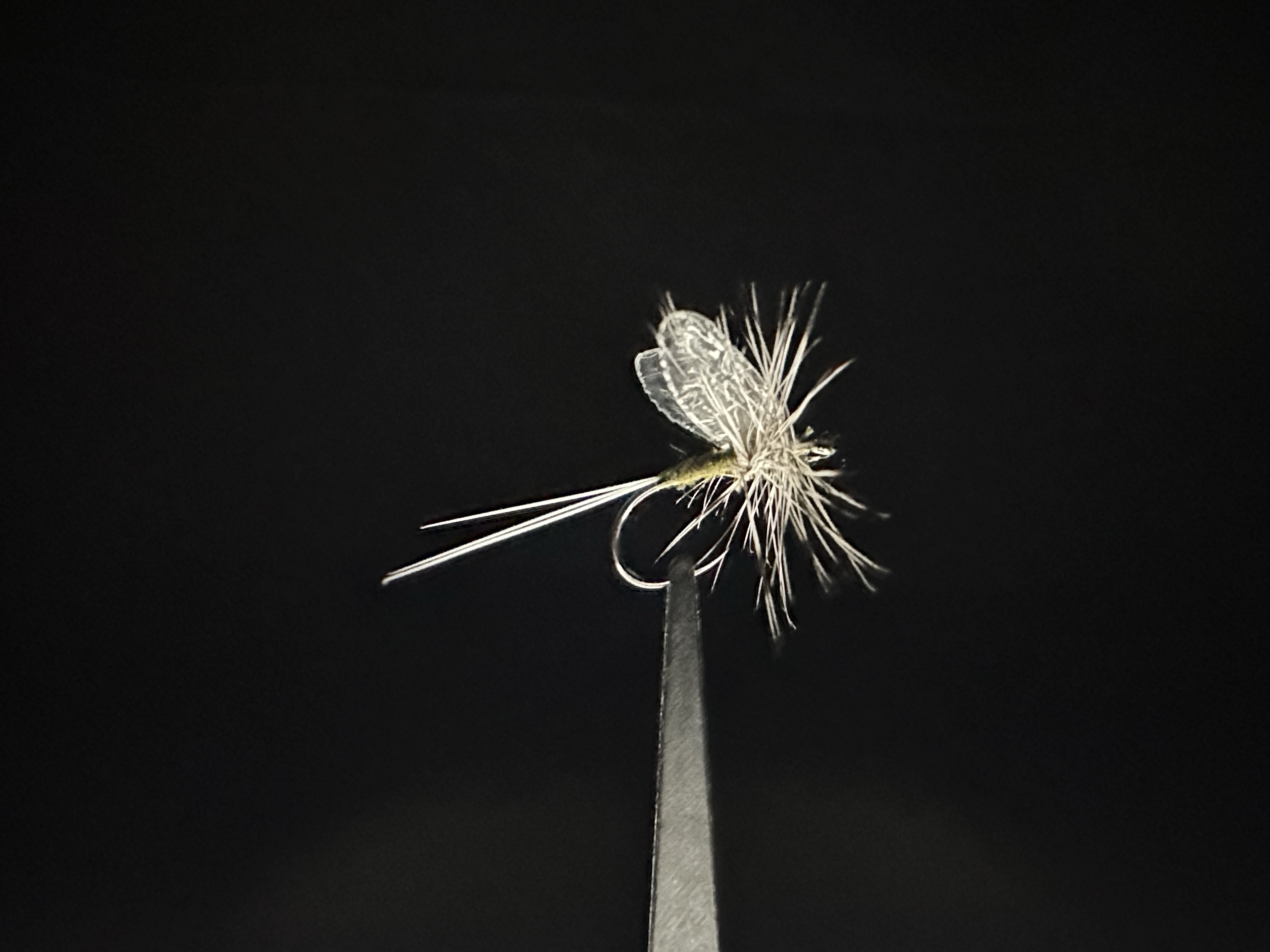
With this setup, I was able to take the following pictures.
The only thing that I'm not happy with is that the sharpness of the flies is not good enough. This is clearly the limitation of the iPhone camera, but I think overall the pictures are really nice, especially the background considering no digital edits were done whatsoever.

You can find all flies from Hooked on Fly Fishing here in the Boutique.
You can find all flies from FlyToTie here in the Boutique.
Maarten's fly is made with his wing burners, see this article for more info.
Some last details
I did end up using a paid app called Halide. This is because the macro mode of the iPhone is such low light conditions will use night mode (long capture time) and generally the focus of the fly was worse. With Halide, you can use macro mode and adjust the focus, and it won't use night mode. If you don't want to spend the money on the app, you can also do without, but I found the picture quality turned out better.
You'll also see that the stand is different. I switched from the glue gun stick to matte black tweezers, clamped together by a rubber band around it. This clamps the hook quite well, and the matte black does not reflect too much light.
Summary and conclusion
Here is what I did to end up with the final pictures:
- Close the window blinds and turn off the light in the room
- Put a large, 100% cotton, black cloth up on the wall
- Use an LED light right, set to the lowest brightness setting, with sometimes the color on cold white and somethings on the most warm white (try to see what works best)
- Put the LED light ring on the surface, so the light shines up to the fly
- You can use any way to hold your fly, but I wanted it to not be reflective so I used matte black tweezers
And that's it! I hope this was helpful and if you have any tips or tricks, please share them on info@flyfishcircle.com.